1.1.2 Oneness

Allah is one. He does not have a mother or father. Nor a child or a sister or a brother. He is the only god. If there were another god, the world would be in chaos. Because they would be disagreement between them. That is why everything is the world works, because only Allah decided how it should be.
[divider]

Attributes of Allah – Oneness (وحدانية)

[dropcap]A[/dropcap]llah is the one and only God.There is no one else like Him; no man or idol could ever be God, because men and idols are made. Anything that is made cannot be God. Allah is the One who created us, takes care of us, and will determine if you go to Heaven.

Allah said that if there were more than one God, they would fight with each other because they would all want to do things their own way; then there would be chaos, or a big mess in the universe. But the universe is not chaotic. Everything works beautifully together. Allah created the planets to work well in their systems; He made each animal’s body suitable to the types of food it eats.

Camels are an example of how Allah created the perfect environment for every creature. Camels are suited to the hot, dry, dusty climate of the desert.


Universe 2.1.2

Every planet in the solar system moves in a perfect orbit around the sun.

Our planet, Earth, is just the right distance from the sun so that we could live on it. If it were any closer to or further from to the sun, we could not live on it.

Sun 2.1.2
[divider]
[button color=”blue” size=”medium” link=”http://www.deenteens.com/worksheets/1.1.2 Oneness.pdf” target=”blank”]Worksheet[/button]

‎1.4.3 Miracles of the Messengers‎

What is a Miracle?


[dropcap]A[/dropcap]mu’jizah, which is called a miracle, in English is something supernatural that only Prophets of ‎Allah can do. In order for an act to be a miracle, it has to fulfill these conditions:‎

‎1. It goes against the laws of nature,‎
‎2. Only a Prophet can do it‎
‎3. It is proof that he is really a Prophet because only Allah can break the laws of nature. Thus, the ‎miracle shows that the Prophet was sent by Allah.‎
‎4. No one can challenge it (meaning no one other than a Prophet of Allah can do the same thing) ‎
‎5. A Prophet can perform the miracle at any time.‎

Allah gives his Prophets miracles so that people can have proof that the Prophet was really sent ‎by Allah and he is not just deceiving them.‎

Other forms of miracles:‎


Sometimes, people other than Prophets do amazing things, but they are mu’jizahs. When a false ‎prophet does something amazing, it will usually give a bad result. ‎

Some pious people have miracles but those miracles aren’t in their control. Instead, it just happens ‎to them. Examples of this are Imam al-Nawawi’s path being miraculously lighted up at night, the ‎Throne shaking at the death of Sa’ad ibn Mu’adh, etc.‎

Differences between Sihr, Magic, and Miracles‎‎


Sihris black magic that is performed with the help of the jinn. It results in making people sick, ‎harming relationships, and even possibly killing a person. It is evil and haram to perform sihr.‎

Magic is sleight of hand used by a magician and just appears as a magical act when in reality it is ‎only a trick.‎

Difference between Sihr and miracles


‎1. Sorcery is a science that can be learned, while miracles cannot be learned.‎

2. Sorcery is done through the use of jinn.‎

3. Learning sorcery is forbidden.‎

Miracles of some Prophets:‎


Mu’jizahs usually occur in the field that is prominent at the time of that Prophet. Here are some ‎examples:‎

Miracles of Prophet Muhammad‎


The Qur’anis the greatest miracle of all times. No one has ever been able to or ever will be able to copy even ‎one chapter of the Qur’an. Muslims don’t get bored of it even if they read it over and over again. ‎It has scientific knowledge that only became known hundreds of years later. It also predicts ‎historical facts with accuracy and tells stories of past generations that our Prophet did not know ‎about.‎

The Prophet Muhammad had many other miracles as well. Some of those are:‎
a. Water came from within his fingers during his travel with his companions. They drank and ‎made wudhu, and a lot still remained. This story has occurred several times (Bukhari)‎
b. He split the moon in half

c. He had a night journey to Jerusalem and then to the seventh sky and beyond which all ‎happened in just one night – in a time when the fastest form of travel was a horse.‎

d. In the Hereafter, he will have a Pool which people drink from and never become thirsty again.‎

e. He will intercede on behalf of Muslims, meaning he will ask Allah to start the Day of ‎Judgment and to enter Muslims into Paradise.‎

Sometimes Muslims get excited and quote incorrect “scientific” evidence to support a miracle. This ‎is not a good idea because Islam proves science, science does not prove Islam. Often, “scientific” ‎evidence changes over time and then it makes it seem like Islam was wrong since it was based on ‎wrong science.‎

Other times, Muslims get shy of miracles because non-believers make fun of them and say there is ‎no proof for what they believe in. A Muslim must confidently recognize that Allah created the ‎universe and He made laws for it. Allah is not bound by those laws and He breaks them when He ‎wills. A person’s self-esteem and confidence in his faith cannot be based on what others think of ‎him, else when others don’t approve of him, his confidence will crumble. ‎

[button color=”blue” size=”medium” link=”http://www.deenteens.com/new/wp-content/uploads/2015/11/Unit-1.4.3-Miracles.pdf” target=”blank”]Worksheet[/button]

1.4.2 Muhammad, Messenger of Allah

Background Of Prophet Muhammad


[dropcap]A[/dropcap]llah sent the Prophet Muhammad as his last Prophet.The Prophet’s full name is Muhammad, son of `Abdullah, son of `Abdul Muttalib, son of Hashim, son of `Abdu Manaf, of the tribe of Quraysh, from the descendants of Isma`il, of the progeny of Abraham.

Significant aspects of his life

He was known amongst his people to be honest and trustworthy. When the Prophet Muhammad was 40 years old, Allah sent the Angel Jibreel to reveal to him the words of Allah. He faced significant difficulty in Maccah in spreading these words. He migrated to Madinah 13 years later, where he established a land that was guided and ruled by the beautiful and merciful religion of Islam. After 10 years of inviting others to Islam, he returned to Maccah triumphantly. He died 10 years after migration as a martyr and was buried in Madinah.

Some Important Facts

The Prophet Muhammad was sent as a Messenger to teach Islam to all of mankind. Allah said, “Say, ‘O mankind! I am the messenger of Allah to you all.” Q[7:158]

He is best of creation. The Prophet was instructed by Allah to say, “I am the master of the children of Adam on the Day of Judgment and I say this without Pride.” [Tirmidhi]

Allah will send no more Prophets after him. He is the final Prophet whose message will reach all humans and jinn until the Day of Judgment. Allah said in the Qur’an, “…he is the Messenger of Allah, and the Last of the prophets.” Q[33:40]

He was sent as a mercy to all of creation

Try answering this quiz once you’re confident with your knowledge of this unit
[WpProQuiz 2]

[button color=”blue” size=”medium” link=”http://www.deenteens.com/new/wp-content/uploads/2015/09/1.4.2-Muhammad.pdf” target=”blank”]Worksheet[/button]

Preliminaries 1: Ranks of Acts in the Shafi’i School

[one_half][box type=”success”]

In this unit:

● Every one of our acts falls into one of five ranks.
● Fard and sunnah acts are good to do.
● Makruh and haram acts are not good to do.[/box][/one_half]

[one_half_last][box type=”note”]

Keywords

  • Fiqh
  • Imam Al-Shafii
  • Fard/Wajib
  • Sunnah/Mandub
  • Mubah
  • Makruh
  • Haram

[/box][/one_half_last]

Allah and His Prophet have told us to do some things and they have told us not to do other things. The scholars of Islam have taught us how to do our everyday acts in the way Allah and His Prophet want us to do them. The science that teaches us how to do these acts is called fiqh. One of the scholars who taught us fiqh is Imam Abu Idris al-Shafi’i. So when we learn fiqh from his teachings, we say that we follow the Shafi’i school.

In Islam, every act that we do has a rank based on how good or bad the act is. In the Shafi’i school, there are 5 ranks of acts.

[toggle title=”1. Fard or Wajib” state=”close”]These are acts you must do. You must never leave an act that is fard. Leaving a fard makes one sinful, but doing it will get us lots of reward, insha’ Allah. Wow, Allah is really merciful![/toggle]
[toggle title=”2. Sunnah (or Mandub)” state=”close”]A sunnah act is one that Allah would like us to do, so it is recommended that we do it. If we do it, we get reward insha’ Allah; if we do not do it, we will not be sinful. But hey, why lose the extra credit?[/toggle]
[toggle title=”3. Mubah” state=”close”]A mubah act is one we can do or not do as we please.[/toggle]
[toggle title=”4. Makruh” state=”close”]A makruh act is one that Allah does not like, so it better not to do it. If you do it, you will not be sinful; if you do not do it, you will get reward. Wouldn’t you like to get extra reward from Allah? I would![/toggle]
[toggle title=”5. Haram” state=”close”]Yikes, no Muslim likes to do a haram thing. A haram act is one you must never do. If you do it, you will be sinful; if you do not do it, you will get reward from Allah and Allah will love you.[/toggle]

Image 2 Preliminary 1

Now let’s take a look at this in table form to make it easier. Some examples will help, too. Let us know if you have any questions (or comment!)

[tabs type=”horizontal”] [tabs_head] [tab_title]Fard[/tab_title] [tab_title]Sunnah[/tab_title] [tab_title]Mubah[/tab_title] [tab_title]Makruh[/tab_title] [tab_title]Haram[/tab_title] [/tabs_head] [tab]PrayerMust do it, reward if you do it.[/tab] [tab]QuranBetter do it, reward if you do it.[/tab] [tab]SleepCan do it or not do it.[/tab] [tab]BearBetter not do it.[/tab] [tab]RobberMust not do it, sinful if you do it.[/tab] [/tabs]

[box type=”warning”]

  • If you do Fard and Sunnah acts, you will have stronger iman and Allah will love you more.
  • You could get rewarded for your mubah acts if you make intention to do them for Allah. Eat dinner and say you are doing it for Allah. Go on!

[/box]

3.1.1 Purification

[one_half][box type=”success”]

In this unit

  • A Muslim purifies his body and his clothes.
  • We purify ourselves from najasah and hadath.
  • Minor hadath is on the face, head, arms and feet.
  • Major hadath is on the entire body.

[/box][/one_half]
[one_half_last][box type=”note”]

Keywords

  • Taharah
  • Najasah
  • Virtual
  • Minor Hadath
  • Major Hadath[/box][/one_half_last]

[dropcap]P[/dropcap]urification (taharah) is the special way a Muslim cleans his body and his clothes. As Muslims, there are two types of purification we are concerned about, especially when we pray.

  1. First, we must purify ourselves from najasah (impurity or filth). Najasah is an impure material. Impure things are unclean things that have to be washed away with water. We will learn about najasah in Unit 3.1.3
  2. Second, we must purify ourselves from hadath. While najasah is a physical substance that we can see, hadath is not something we can see. It is just a virtual unclean thing; that means it is something you cannot see but it affects your worship of Allah.

Hadath is two types.

[toggle title=”Minor Hadath” state=”close”][one_third]Minor hadath covers the parts of the body that have to be washed in wudu. When a person does not have wudu, then he has minor hadath on the face, arms, head and feet. See the figure on the right.[/one_third]
[one_third]3.1.1 green boy[/one_third]
[one_third_last]The green color on this boy shows where minor hadath is on the body.[/one_third_last][/toggle]
[toggle title=”Major Hadath” state=”close”][one_third]It covers the entire body. When a person does not have ghusl, then he has major hadath on his entire body. See the figure on the right.[/one_third]
[one_third]3.1.1 black body[/one_third]
[one_third_last]The black color on this man shows where major hadath is on the body.[/one_third_last][/toggle]


[divider]
[button color=”blue” size=”medium” link=”http://www.deenteens.com/worksheets/3.1.1 Purification.pdf” target=”blank”]Worksheet[/button]

3.1.2 Using water for purification

[one_half][box type=”success”]

In this unit:

  • There are three types of water.
  • Use purifying water for purification.
  • Purifying water is from natural resources.

[/box][/one_half]
[one_half_last][box type=”note”]

Keywords

  • Purifying water
  • Pure water
  • Changed water
  • Used water
  • Makruh water[/box][/one_half_last]

[dropcap]W[/dropcap]hen we purify ourselves from hadath or najasah in normal circumstances, we must use water. Allah has made water readily available in natural resources; we have water from the sky and from bodies of water on the earth. Water has three special characteristics: clear color, special taste and a special smell.
 

Four types of water

[toggle title=”1. Purifying water” state=”close”]The water we use for purification must be purifying. That means it should be water that is free from najasah. Also it means that the water was not used before for another type of purification. Finally, the water should have its original color, taste and smell.[/toggle]
[toggle title=”2. Pure water” state=”close”]
This water is nice and clean; but it cannot be used for purification. Purifying water becomes pure water for 2 reasons:

a) It is used: If it is used for another purification (wudu or ghusl). The water that was used for making wudu is still clean, but it cannot be used to purify other things. Why? Because now it has hadath in it. Remember the boy with the green paint on his face, arms, head, and feet? Just imagine that green paint in your wash water when you make wudu.
3.1.2 - used water
b) It is changed: If something is mixed with the water so that its color, taste or smell is changed. See the diagram below for an example of pure water.[/toggle]
[toggle title=”3. Impure water” state=”close”]This water is not pure because something impure (najis) got into it. Do not make wudu with impure water! It won’t be able to purify you from minor hadath.[/toggle]
[toggle title=”4. Sun-heated water” state=”close”]This is water that has been heated in direct sunlight, in a metal container, in very hot places during the hot season. While the water is still hot, it’s makruh to use this water on your body. But once it cools down, it’s not longer makruh to use, so you can go ahead and use it.[/toggle]
3.1.2 - Types of water
[box type=”warning”]

  • Water from natural resources such as rain, rivers, oceans and streams is all purifying.
  • Water does not become used or changed or najis if the amount is very large. That’s why an entire river or ocean would not become najis.

[/box]
[divider]
[button color=”blue” size=”medium” link=”http://www.deenteens.com/worksheets/3.1.2 water.pdf” target=”blank”]Worksheet[/button]

3.1.3 Cleaning Filth

Some things are considered filth and have to be removed in a particular way.
[divider]
[one_half]
[box type=”success”]

In this unit:

  • There are three types of impurity.
  • There is a lengthy procedure for removing major impurity.
  • Water must be used to remove impurity.[/box]

[/one_half]
[one_half_last][box type=”note”]

Keywords

  • Najis
  • Najasah
  • Valid
  • Edible
  • Slaughtered
  • Mughallazah
  • Mukhaffafah[/box][/one_half_last]

[dropcap]T[/dropcap]here are some things that Islam considers to be impure (najis). Impure is different from dirty. Some things are dirty, but they are pure. An example of a dirty thing is rotten food. Some things seem clean, but they are najis. An example of this is the hairs that fall off a cat.

Najasah (Impurity)2

Impure things (najasah) have to be removed from our bodies and our clothes in a special way before we pray. If they are on us while we pray, our prayer will not be valid. That means it’s like we didn’t pray at all! Also, if these impure items get into water, they make the water impure.

It’s better to remove dirty things from our body so we can stay clean and healthy. Unlike with impure things, there’s no special way to remove dirt. You can remove it in any way you like. Also, if you do pray with something dirty on you, your prayer will still be valid.

There are three types of najasah: major, regular, and light. They are divided into these categories based on how we are supposed to clean them.

Three types of Najasah

[toggle title=”Najasah mughallazah (major impurity)” state=”close”]Najasah (Impurity)3[/toggle]
[toggle title=”Najasah (regular impurity)” state=”close”]3.1.3 - NajasahA short discussion on some of the regular impurities:

For this discussion, “excused” means that your prayer is valid even if you have that najasah on your clothes or body.

1. Blood or pus on our body or clothes is excused if it is our own blood or pus, it is not mixed with other things, and we did not cause the bleeding on purpose.

3. Beware of alcohol in makeup and perfumes. Always check the ingredients!

4. A little bit of najis animal hairs is excused.

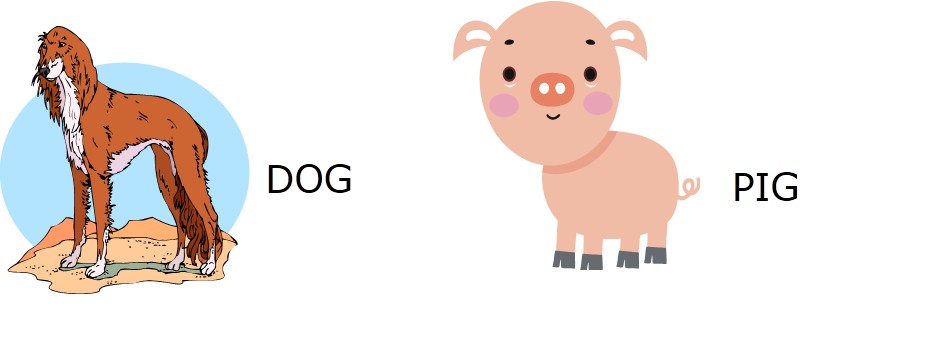
5. Animal skin can become pure if it is tanned. But the skin of a dog or pig will never become pure.[/toggle]
[toggle title=”Najasah mukhaffafah (light najasah)” state=”close”]The urine of baby boys is light najasah as long as the baby boy is less than 2 lunar years of age and has only eaten milk.[/toggle]

How to Purify Something That Has Become Najis (impure)

[toggle title=”Major impurity” state=”close”]

First wash off the impurity until its color, taste and smell are gone. Then wash the impure area 7 times with purifying water. In one of those washes, mix the water with dust, then wash the impure area with it.

Let’s take an example. Suppose a dog licked your hand. Here is what you would do to clean it:

[/toggle]
[toggle title=”Regular impurity” state=”close”]First wash off the impurity until its color, taste and smell are gone. Then wash the impure area 1, 2 or 3 times with purifying water.

Let’s take another example. Suppose you got some urine on your hand. Here is how you would clean it:
Wash Najasah 2[/toggle]
[toggle title=”Minor impurity” state=”close”]Squeeze or wring out all the baby’s urine. Sprinkle the entire affected area with purifying water until the whole area is covered by water droplets. Now the area is clean. Since cleaning it is easy, a baby boy’s urine is called light najasah.[/toggle]

[box type=”warning”]

  • If you have a tiny bit of blood from dead bugs on you, it is excused.
  • When you tan an animal skin, you use chemicals to dry it up.[/box]

[divider]
[button color=”blue” size=”medium” link=”http://www.deenteens.com/worksheets/3.1.3 najasah.pdf” target=”blank”]Worksheet[/button]

3.1.4 The Full Wudu Described

When we want to pray, we must make wudu. Wudu requires an intention and some washing and some wiping.
[divider]

[one_half][box type=”success”]

In this unit:

  • Wudu removes minor hadath from the face, arms, head and feet.
  • Every body part in wudu can be washed (or wiped) 1, 2 or 3 times.
  • Wudu requires a niyyah.

[/box][/one_half]

[one_half_last][box type=”note”]

Keywords

  • Niyyah
  • Fard
  • Sunnah
  • Hadath[/box][/one_half_last]

[toggle title=”1. Wash your hands while saying the niyyah for the sunnahs of wudu in your heart.” state=”open”]
Wash your hands all the way up to and including your wrist. You can wash your hands 1, 2 or 3 times; but 3 is best. You only need to say the niyyah once. All the parts of wudu can be washed 1, 2 or 3 times; but 3 is best.
The Full Wudu Described1[/toggle]
[toggle title=”2. Rinse your mouth.” state=”close”]
[three_fourth] Take a handful of water and put it in your mouth. Move the water around in your mouth, then spit it out. Don’t swallow![/three_fourth]

[one_fourth_last]The Full Wudu Described2[/one_fourth_last][/toggle]
[toggle title=”3. Rinse your nose.” state=”close”]
[three_fourth] Take a handful of water and gently sniff it into your nose. Don’t do it too hard or it will hurt.[/three_fourth]

[one_fourth_last]The Full Wudu Described3[/one_fourth_last][/toggle]
[toggle title=”4. Wash your face while saying your niyyah in your heart.” state=”close”]
Wash from just above your hairline to below your chin; and from one ear to the other. Make sure you get lots of water on your face. Don’t just wipe water on the sides of your face. The words of the intention are given in the
The Full Wudu Described4[/toggle]
[toggle title=”5. Wash your arms” state=”close”]
[one_half]from your fingertips all the way to your elbow. Wash your elbows too. Make sure you wash with flowing water. Don’t just wipe your arms or it won’t be a proper wudu.[/one_half]

[one_half_last]The Full Wudu Described5[/one_half_last][/toggle]
[toggle title=”6. Wipe a part of your head.” state=”close”]
[one_half]Wet your hand and wipe at least one hair; but it is better to wipe the
whole head. You can wipe your head 1, 2 or 3 times; but 3 is best.[/one_half]

[one_half_last]The Full Wudu Described6[/one_half_last][/toggle]
[toggle title=”7. Wipe the inside and outside of your ear” state=”close”]
The Full Wudu Described7[/toggle]
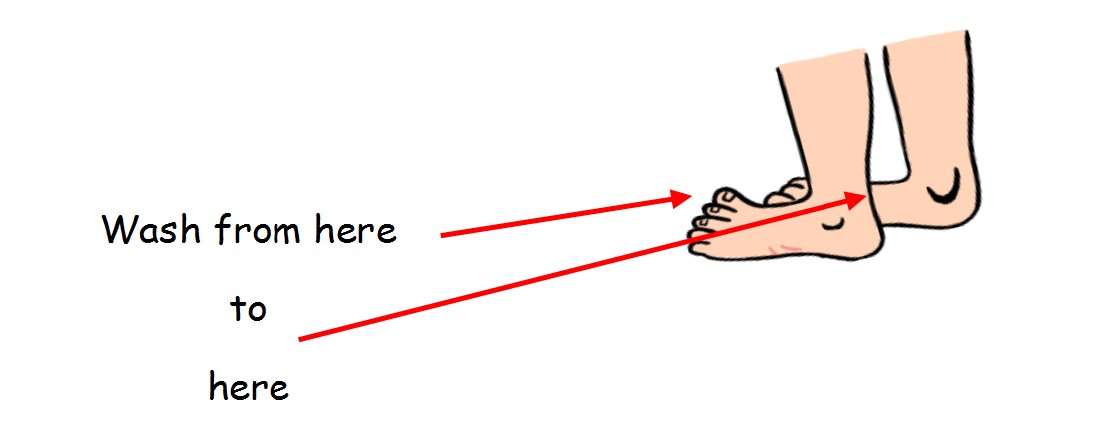
[toggle title=”8. Wash your feet” state=”close”]
…from the tips of your toes up to and including your ankles.
The Full Wudu Described8[/toggle]
[toggle title=”9. Do it all in that order.” state=”close”]
We will talk about how to fix a mistake if you forget one act or do it out of order.[/toggle]

Fard and Sunnah of Wudu

In the next section, you will learn that 6 of the acts of wudu are fard. All the rest of the acts are sunnah. The acts that are fard must be performed and they must be performed in order. You must never leave one of these acts. If you do forget one of them, or if you do it out of order, you will have to correct your mistake. We will learn how to correct mistakes in a later lesson, insha Allah.
Sunnah and Fard of Wudu

[box type=”warning”]

  • The niyyah (intention) is the words you say in your heart to state what you are doing. Worships are not valid without niyyah.
  • In the niyyah, you must state what you are doing. If the act is fard, you must say so in your niyyah.

[/box]
[divider]
[button color=”blue” size=”medium” link=”http://www.deenteens.com/worksheets/3.1.4 full wudu.pdf” target=”blank”]Worksheet[/button]

3.1.5 The Arkan of Wudu

[one_half]
[box type=”success”]

In this unit:

  • Wudu has 6 fard acts.
  • The fard parts of any ibadah are called its arkan.
  • You must never leave any of the arkan or your wudu will be invalid.

[/box]
[/one_half]

[one_half_last][box type=”note”]

Keywords

  • Rukn
  • Arkan
  • Fard[/box][/one_half_last]

[dropcap]W[/dropcap]e saw in Lesson 3.1.4 that wudu has many acts. However, all of those acts are not fard or wajib. The fard parts of anything we do are called its arkan. The singular of arkan is rukn. So wudu has 6 fard acts which are 6 arkan. We explained in Preliminaries that a fard act is one that must always be done. If you leave one of these acts, your wudu will not be valid. If you leave a fard act, you have to make it up.

In wudu, the 6 fard acts are: niyyah, washing the face, washing the arms, wiping the head, washing the feet and doing it all in that order. The figure below will help you remember them.

The Arkan of Wudu2
[divider]
[button color=”blue” size=”medium” link=”http://www.deenteens.com/worksheets/3.1.5 Arkan of Wudu.pdf” target=”blank”]Worksheet[/button]

3.1.6 What is Wudu Needed For?

[one_half][box type=”success”]

In this unit:

  • We have to be in wudu to do certain acts of worship.
  • Prayer, any type of sajda, and tawaf all require wudu.

[/box][/one_half]

[one_half_last][box type=”note”]

Keywords

  • Sujud Tilawah
  • Sujud Al-Shukr
  • Tawaf[/box][/one_half_last]

[toggle title=”1. To be able to pray or give the Friday khutbah.” state=”open”]
[two_third]You also need wudu to make sujud al-tilawah (sujud for reading certain parts of the Qur’an) and to make sujud al-shukr (sujud for thanking Allah). Sajdah is considered an act of prayer; that is why we always have to have wudu to make any type of sajdah.[/two_third]
[one_third_last]What is Wudu Needed For[/one_third_last][/toggle]

[toggle title=”2. To make tawaf around the Ka’ba.” state=”close”]
[two_third]Tawaf around the Ka’ba means to go around the Ka’ba.[/two_third]
[one_third_last]What is Wudu Needed For2.png[/one_third_last][/toggle]

[toggle title=”3. To touch or carry the Qur’an.” state=”close”]
[two_third]By Qur’an, we mean anything that has lots of the Qur’anic Arabic words on it. So if a piece of paper has lots of Qur’an written on it, you will need wudu in order to touch the paper. By lots of Qur’an we mean that half or more of that paper or book is the Arabic words of the Qur’an. If you do not have wudu, you cannot touch or carry the Qur’an even if it is covered with something.[/two_third]
[one_third_last]What is Wudu Needed For3[/one_third_last][/toggle]

[box type=”warning”]

  • If you do not have wudu, then you cannot pray, you cannot make tawaf around the Ka’ba and you cannot touch the Qur’an.
  • You do not need wudu to recite the Qur’an, you only need wudu to touch the Qur’an.[/box]

[divider]
[button color=”blue” size=”medium” link=”http://www.deenteens.com/worksheets/3.1.6 what wudu is needed for.pdf” target=”blank”]Worksheet[/button]