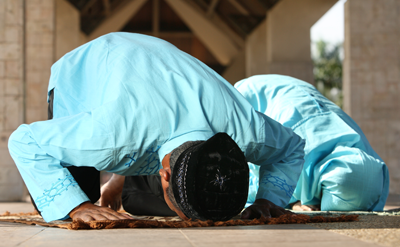
3.2.1 The Salah (Prayer)

[one_half][box type=”success”]

In this unit:

  • The Salah is the most important worship a Muslim performs.
  • Fard acts are the most important acts we do; however, even sunnah acts will make us better Muslims.[/box][/one_half]

[one_half_last][box type=”note”]

Keywords

  • Salah
  • Arkan
  • Rukn[/box][/one_half_last]

[dropcap]T[/dropcap]he first of our acts that will be judged by Allah on the Day of Judgment is our prayer. If the prayer is good, all our other acts will be good. May Allah fill our scales with accepted prayers. Our salah or prayer is the special way we worship Allah.
 
In these lessons, you will not learn the whole process of prayer. You need to learn that from your teacher. It will require a lot of practice; may Allah make it easy from you and accept all your prayers.
 
You will learn the arkan of prayer. Remember that arkan is the plural of rukn (which are the acts that are fard). You will also learn what acts in the prayer are sunnah (highly recommended to do) and what acts are hay’ah (recommended).
The reason we learn about the different types of acts in prayer is so that we know how to fix any mistakes we make in our prayer. You fix a mistake in a fard of prayer in a special way.
 
Some people think that if an act is not fard, it is not important. That is not true at all. All our worships are important. The more you do for Allah, the more He will love you and reward you. And we all need as much love and reward as we can get!
 
[toggle title=”The Definition of Salah” state=”open”]

Salah is specific words and acts that begin with takbir and end with taslim,
with certain conditions.

[/toggle]

[box type=”warning”]Each of the 5 daily prayers acts like a purification for the Muslims. It washes away our sins.[/box]

3.2.2 Times of the Five Prayers

[one_half][box type=”success”]

In this Unit:

  • There are 5 Prayers that are obligatory for Muslims to pray.
  • The times of these prayers are determined based on the position of the sun in the sky and shadows on the ground.

[/box][/one_half]

[one_half_last][box type=”note”]

Keywords

  • Fajr
  • Sunrise
  • Zuhur
  • Zawal
  • Asar
  • Maghrib
  • Sunset
  • Isha

[/box][/one_half_last]

3.2.2 image

[dropcap]M[/dropcap]uslims are obligated to pray 5 times per day. Though most of us rely on calendars and watches to tell us the prayer time, in reality, the prayer times are determined by the position of the sun and the length of shadows.

How to determine the times of the 5 prayers:

[toggle title=” 1. Fajr (Dawn prayer)” state=”close”]
Start time: At true dawn which is when you see a white light stretched across the horizon.

End time: When the sphere of the sun starts to appear over the horizon
[/toggle]

[toggle title=” 2. Zuhur (Noon prayer)” state=”close”]
Start time: Zawal – which is when the sun passes its highest point in the sky. You know this has happened when the shadow of an object, say a meter stick, goes from decreasing to increasing.

End time: When the shadow of an object is equal to the length of the object

Or more accurately:

Length of meter stick: 100 cm
Length of shadow at zawal: 5 cm
Length of shadow at end of zuhur = x

x = 100 cm+ 5 cm = 105 cm

When x is 105 cm, zuhur is finished, asr has started.

[/toggle]

[toggle title=” 3. Asar (Evening prayer)” state=”close”]
Start time: End of zuhur

End time: When the entire sphere of the sun sets.
[/toggle]

[toggle title=”4. Maghrib (Sunset prayer)” state=”close”]
Start time: When the sun sets

End time: When the redness of sunset leaves the sky.
[/toggle]

[toggle title=”5. Isha (Night prayer)” state=”close”]
Start time: When the redness of the sunset leaves the sky.

End time: Dawn
[/toggle]

Now watch this video to see how to determine the beginning and end of zuhur and asr.


[divider]
[button color=”blue” size=”medium” link=”http://www.deenteens.com/worksheets/3.2.2 times of the five prayers (watermark).pdf” target=”blank”]Worksheet[/button]

3.2.3 The Adhan and the Iqamah

[one_half][box type=”success”]

In this unit

  • Muslims call the adhan for the daily prayers to announce the entry of the prayer time.
  • The iqamah announces the start of the prayer.
  • Make dua between the adhan and the iqamah.

[/box][/one_half]
[one_half_last][box type=”note”]

Keywords

  • Adhan
  • Iqamah

[/box][/one_half_last]

minaret[dropcap]I[/dropcap]t is sunnah to say the adhan to announce the beginning of the 5 daily prayers. It is also sunnah to say the iqamah to let people know that the prayer is just about to begin.

[toggle title=”The Adhan Described” state=”open”]

    1. Make wudu (it is sunnah to do this)
    2. Stand with your chest facing the Qiblah
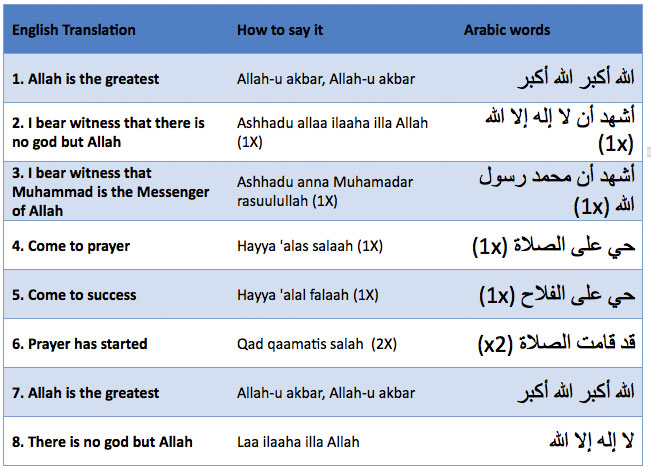
    3. Say the following (only say the Arabic words that are in column 3)

[/toggle]

athaan-meaning
The words of the adhan are in this table

[toggle title=”The Adhan of Fabr/Subh (Morning)” state=”open”]

In the adhan of the morning prayer, it is sunnah to add one more line before line 6; you say:

الصلاة خير من النوم (as-salaatu khayrum min an-nawm) which means prayer is better than sleep.[/toggle]

[divider]

[toggle title=”The Iqamah (Call to Start the Prayer)” state=”open”]

You say the iqamah right before the prayer starts. You can say the iqamah whether praying with a group or by yourself. Women can say the iqamah if they are not praying with men.[/toggle]

The words of the iqamah are very similar to the words of the adhan. Here is what you say:

iqamah-meaning
The words of the iqamah are in this table

[divider]

[toggle title=”Who Can Make the Adhan” state=”open”]

A Muslim male who is 7 years or older can make the public adhan. For women, the adhan is not sunnah. The adhan should be said loud enough for some people to hear it.[/toggle]
[divider]

[toggle title=”What to Say When You Hear the Adhan and Iqamah” state=”open”]

It is sunnah for anyone who hears the adhan and iqamah to repeat the statements except

        1. In response to the haya ‘alas salah and haya ‘alal falaah one should say la hawla wa la quwwata illaa bi-Allah (لا حول ولا قوة إلا بالله) which means nothing can change and no one can do anything except by Allah’s (will).
        2. In response to qad qaamatis salah one should say aqaamaha Allah wa adaamahaa wa ja’alany min salihiy ahliha ( وجعلني من صالحي أهلها أقامه الله وأدامه) which means May Allah keep it everlasting and make me of those who uphold it.
        3. In response to the as-salaatu khayrum min an-nawm one should say sadaqta wa barirt (صدقت وبرِرت)  which means you have told the truth and said something good.

[/toggle]

[divider]

[toggle title=”What to Say after the Adhan” state=”open”]

dua

    1. Say salah and salam on the Prophet and his family
    2. Say this du’a
      اللهم رب هذه الدعوة التامة والصلاة القائمة آت محمداً الوسيلة والفضيلة وابعثه مقاما محموداُ الذي وعدته
      Which means, “O Allah, Lord of this perfect call and of the regular prayer which is going to be established. Give Muhammad (saws) the right of intercession and superiority and bestow upon him the station of Praise and Glory which You promised him; You never ever go against Your Promises.
    3. Then make du’a for yourself, your family, your teachers and the Muslims

[/toggle]

[divider]
[button color=”blue” size=”medium” link=”http://www.deenteens.com/worksheets/3.2.3 The Adhan and Iqamah.pdf” target=”blank”]Worksheet[/button]

3.2.4 Times in which Prayer is Makruh

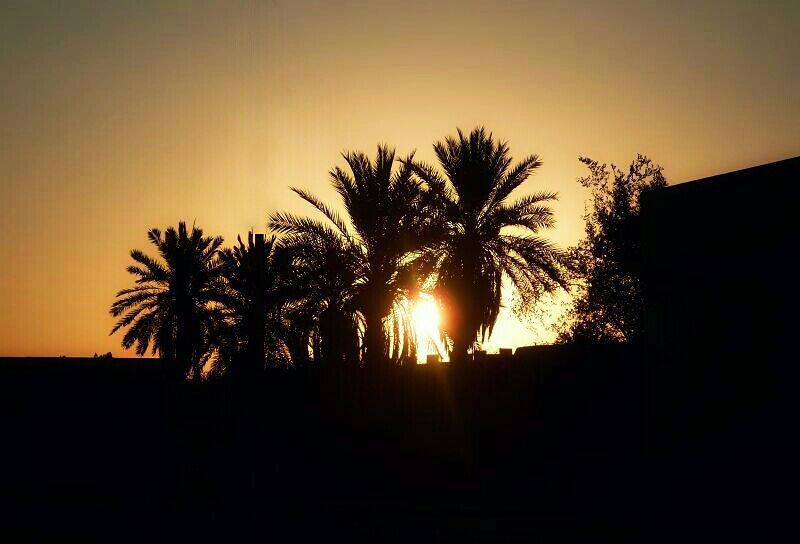
sunrise[dropcap]W[/dropcap]e say these are the times in which prayer is makruh, but really, it is haram to pray at these time. This type of makruh is known as “makruh tahrimi” (kind of like saying makruh to the point of being haram).

Review: The Meaning of Makruh and Haram

Makruh: A makruh act is one that Allah does not like, so it better not to do it. If you do it, you will not be sinful; if you do not do it, you will get reward. Can you name some makruh acts?

Haram: A haram act is one you must never do. If you do it, you will be sinful; if you do not do it, you will get reward from Allah and Allah will love you. Can you name some haram acts?

Makruh tahrimi is similar to haram in that one can be sinful for doing the act.
[toggle title=”Check the table here to understand more…” state=”close”]
3.2.4 table (1)[/toggle]

[toggle title=”There are five times in which it is makruh tahrimi
to pray without a valid reason.
” state=”close”]
3.2.4 table[/toggle]

3.2.2 sun picture

Valid reasons to pray in the Makruh Prayer Times

We said you cannot pray without a valid reason. That means you can pray some prayers during the haram times for valid reasons. Here is a list of prayer you CAN pray at the haram times:

1. Any prayers you missed at their time
2. Make-up prayers
3. Funeral prayer
4. Prostrations for recitation of the Qur’an and for thankfulness
5. The two rakah for tawaf
6. Eclipse prayers
7. Two rakah for a wudu
8. Prayer for rain
9. Istikharah prayer
[divider]
[button color=”blue” size=”medium” link=”http://www.deenteens.com/worksheets/3.2.4 time in which prayer is haram (watermark).pdf” target=”blank”]Worksheet[/button]

3.2.5 Conditions of Prayer

[one_half][box type=”success”]

In this unit:

  • There are 5 conditions you must fulfill before and throughout the prayer.
  • If any of these 5 things is not taken care of, your prayer will be invalid.

[/box][/one_half]

[one_half_last][box type=”note”]

Keywords

  • Conditions
  • Prerequisites
  • Awra
  • Qibla[/box][/one_half_last]

[dropcap]T[/dropcap]here are 5 conditions we must fulfill before we start our prayer. That means there are 5 things we have to do for prayer before we even start praying. These conditions are not part of the prayer. They are prerequisites we must take care of before and during the prayer. A prerequisite is something we are required to do even before we start to pray. Without these, our prayer isn’t valid – our prayer is disqualified.

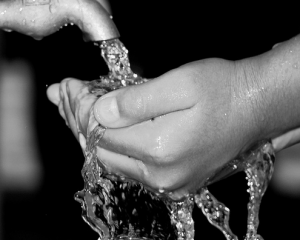
[toggle title=”1. We must purify ourselves from hadath and filth” state=”open”][one_half]We lift hadath by making wudu and/or ghusl. We remove filth by washing it away from our body and clothes. If filth comes on you, you just wash off the place of the filth with purifying water. You do not have to make wudu if you have filth on you. Wudu is only for lifting hadath.[/one_half]

[one_half_last]

Conditions of Prayer3.jpg
As you make wudu, the hadath (“green paint”) comes off you

[/one_half_last]
[/toggle]

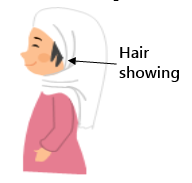
[toggle title=”2. We must cover our awra with pure clothes” state=”close”][one_half]The awra is the parts of the body that have to be covered. In prayer, the awra for girls is everything but the hands and face. Make sure everything else is covered. The color and shape of the body should not show through your clothes. For boys, the awra is from the belly button to the knees. It is also good to cover the upper body. Make sure your clothes are pure; there should be nothing najis on them.[/one_half]
[one_half_last]Conditions of Prayer4[/one_half_last]
[/toggle]

[toggle title=”3. We must stand on a pure place” state=”close”][one_half]Make sure there is no najasa in the place you are standing to pray. The best thing to do is put a prayer rug on the floor or ground. Always keep your prayer rug clean.[/one_half]
[one_half_last]Conditions of Prayer5[/one_half_last][/toggle]

[toggle title=”4. Before we start praying, we must be sure that the time of prayer is in” state=”close”][one_half]Do not start prayer until you are sure the time is in, otherwise you have to pray again.[/one_half]
[one_half_last]Conditions of Prayer6[/one_half_last][/toggle]

[toggle title=”5. We must be sure to face the qiblah” state=”close”][one_half]The qibla or direction for prayer is the Ka’ba in Makkah. If you cannot figure out the direction of the qiblah by yourself, ask someone who would know.[/one_half]
[one_half_last]Conditions of Prayer7[/one_half_last][/toggle]

There are only two situations in which we do not have to face the Qibla:

3.2.5 pray sitting
[divider]
[button color=”blue” size=”medium” link=”http://www.deenteens.com/worksheets/3.2.5 conditions for prayer.pdf” target=”blank”]Worksheet[/button]

3.2.9 Correcting Mistakes in Prayer

[one_half][box type=”success”]

In this Unit:

  • If you miss a rukn, you have to make it up.
  • If you miss ab’aad, you should perform sujud sahw to correct your mistake.
  • There is nothing to do for missing a hay’ah.

[/box][/one_half]

[one_half_last][box type=”note”]

Keywords

  • Sujud Sahw
  • Ab’aad
  • Hay’ah/Hay’at

[/box][/one_half_last]

[dropcap]W[/dropcap]hat do you do if you made a mistake in your prayer? The answer is: it depends on what mistake you made.

Remember, in your prayer, some acts are fard, some acts are ab’aad, and some are hay’ah. Can you name some acts of prayer that fall into each of those 3 categories?

[toggle title=”A Mistake in a Rukn of Prayer” state=”close”]
Review Unit 3.2.7 to refresh your memory about the arkan of prayer.
If you make a mistake in one of the 13 arkan of prayer, then sujud al-sawh is not enough to fix the problem. Here is what you must do.

1) If you remember the mistake before you get to the same part in the next rakat: just stop what you are doing, go back to where your mistake was and correct your mistake.

For example, you forget to make ruku, then you remember it while you are making sajdah. You must:

1. Stop making sajdah
2. Stand up straight,
3. Make ruku,
4. Make sajdah
5. At the end of the prayer, make 2 sujud al-sahw right before you say assalamu alaikum wa rahmatullah.

The diagram below will help you see what steps you must take in order to fix the above mistake.

3.2.9 pic1

2) If you remember the mistake after you get to the same part in the next rakat: it is as if you did not pray the first rakat. Pray one extra rakat in place of the rakat you made a mistake in.

In both cases, you must ALSO make sujud al-sahw at the end of your prayer.

Don’t forget: if you miss a rukn, you must do TWO things:
1) Make it up
2) Make sujud al-sahw

If all that seems confusing, don’t worry. The teacher will practice with you until you get it. Prayer is the most important thing we do in our whole life. Learning to do it right is also very important. We want all of our prayers to be accepted by Allah.[/toggle]

[toggle title=”A Mistake in the Ab’aad of Prayer” state=”close”]
Review Unit 3.2.8 to refresh your memory about the ab’aad of prayer. If you make a mistake in one of the ab’aad of prayer, here is what you do.

1) If you started the next fard act, just leave the ab’aad without doing anything about it. The only thing you need to do is make sujud al-sahw!

2) If you have not moved on to a fard, then fix the mistake you made in the ab’aad.[/toggle]

[toggle title=”A Mistake in a Hay’ah of Prayer” state=”close”]
Review Unit 3.2.8 to refresh your memory about the hay’ahs of prayer. If you make a mistake in a hay’ah, don’t do anything about it and don’t make sujud al-sahw.[/toggle]

[toggle title=”A Mistake in the Number of Rakat You Prayed” state=”close”]
Have you ever forgotten how many rakat you already prayed? After sajdah you ask yourself, “Hmm… is this my third rakat or my fourth?” If that ever happens to you, here is what you do: Go with what you are sure of – and that is the smaller number.

Here’s what I mean. You know for sure you prayed 3 rakat. But you’re not sure if you prayed the fourth rakat. So you must go with what you are sure of and assume you only prayed 3 rakat. Now pray one more rakat; then do sujud al-sahw in case you prayed too many rakat without realizing it.

Don’t forget: if you don’t know how many rakat you prayed:
1) Assume you prayed the lesser number of rakat, so pray an extra rakat,
2) Make sujud al-sahw at the end of your prayer

[/toggle]

How to perform Sujud Al-Sahw

You make sujud al-sahw for any mistakes you made in prayer. It helps wipe out some of those mistakes.

In the last sitting, immediately before you say the first “assalamu alaikum”, you should make two sajdahs and sit between the two sajdahs. After the second sajdah, say “assalamu alaikum” twice to end the prayer.

If you forget to make sujud al-sahw, then you do not need to do anything else because
sujud al-sahw is only sunnah.

3.2.9 pic2
[divider]
[button color=”blue” size=”medium” link=”http://www.deenteens.com/worksheets/3.2.9 (watermark).pdf” target=”blank”]Worksheet[/button]

3.2.10 Things That Break The Prayer

[one_half][box type=”success”]

In this Unit:

  • Prayer has its own special acts and statements.
  • Doing or saying things that are not part of the prayer could break your prayer.
  • If your prayer is broken, you have to pray it over.

[/box][/one_half]

[one_half_last][box type=”note”]

Keywords

  • Sujud Sahw
  • Ab’aad
  • Hay’ah/Hay’at

[/box][/one_half_last]

[dropcap]W[/dropcap]hen you are praying, you are not allowed to do anything but the acts and words of prayer. In fact, if you do certain things, you prayer will break. Let’s take a look at the things that you CANNOT do while praying. If you do these things, it will break you prayer and you must start all over again.

[toggle title=”1. You cannot talk to people or make noises such as crying and laughing out loud.” state=”close”]3.2.10 (1)[/toggle]
[toggle title=”2. You cannot move your arms, legs and/or head 3 times in a row.” state=”close”]
If you have to move, do it one step at a time and rest between each step.

3.2.10 (2)[/toggle]
[toggle title=”3. You cannot break your wudu.” state=”close”] If you do, your prayer is broken. You need to make a new wudu and pray all over again.3.2.10 (3)[/toggle]
[toggle title=”4. You cannot get filth on yourself or your clothes.” state=”close”]3.2.10 (4)[/toggle]
[toggle title=”5. You cannot let your body get uncovered.” state=”close”] Remember, boys must cover themselves from the belly to the knees; and girls must cover their entire body except for the hands and face.3.2.10 (5)[/toggle]
[toggle title=”6. You cannot eat or drink.” state=”close”]3.2.10 (6)[/toggle]
[toggle title=”7. You cannot turn away from the direction of the Qibla.” state=”close”]3.2.10 (7)[/toggle]
[toggle title=”8. You cannot change your intention.” state=”close”]3.2.10 (8)[/toggle]
[divider]
[button color=”blue” size=”medium” link=”http://www.deenteens.com/worksheets/3.2.10 (watermark).pdf” target=”blank”]Worksheet[/button]

3.2.11 The Differences Between Men and Women in Prayer

[one_half][box type=”success”]

In this unit

  • Learn the differences between the way a man and woman prays.

[/box][/one_half]
[one_half_last][box type=”note”]

Keywords

  • Awra
  • Recitation

[/box][/one_half_last]

The Differences Between Men and Women in Prayer

In most of the prayer, men and women have to do the same movements and say the same things. However, there are some things which are recommended for men and women to do differently.

MAN

manpraying

WOMAN

womenpraying

1 Holds his elbows away from his sides in sajdah Holds her elbows against her sides
2 Holds his stomach away from his thighs in sajdah and ruku Holds stomach close to thighs in sajdah
3 Recites loudly in loud prayers (Fajr, Maghrib, Isha) Recites loudly ONLY if non-mahram men cannot hear her
4 If he wants to notify the imam of a mistake, he says subhan Allah with the intention of making dhikr If she wants to notify the imam of a mistake, she claps the back of her left hand with her right hand
5 His awra, in prayer, is from his belly to his knees (Remember: the awrah is the part of the body one has to cover) Her awra, in prayer, is her whole body except her hands and face


[button color=”blue” size=”medium” link=”http://www.deenteens.com/worksheets/3.2.11 The Differences Between Men and Women in Prayer.pdf” target=”blank”]Worksheet[/button]