Doing or saying things that are not part of the prayer could break your prayer.
If your prayer is broken, you have to pray it over.
[/box][/one_half]
[one_half_last][box type=”note”]
Keywords
Sujud Sahw
Ab’aad
Hay’ah/Hay’at
[/box][/one_half_last]
[dropcap]W[/dropcap]hen you are praying, you are not allowed to do anything but the acts and words of prayer. In fact, if you do certain things, you prayer will break. Let’s take a look at the things that you CANNOT do while praying. If you do these things, it will break you prayer and you must start all over again.
[toggle title=”1. You cannot talk to people or make noises such as crying and laughing out loud.” state=”close”][/toggle]
[toggle title=”2. You cannot move your arms, legs and/or head 3 times in a row.” state=”close”]
If you have to move, do it one step at a time and rest between each step.
[/toggle]
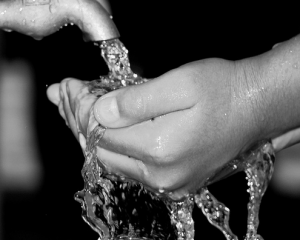
[toggle title=”3. You cannot break your wudu.” state=”close”] If you do, your prayer is broken. You need to make a new wudu and pray all over again.[/toggle]
[toggle title=”4. You cannot get filth on yourself or your clothes.” state=”close”][/toggle]
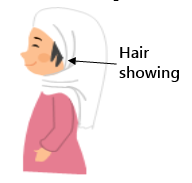
[toggle title=”5. You cannot let your body get uncovered.” state=”close”] Remember, boys must cover themselves from the belly to the knees; and girls must cover their entire body except for the hands and face.[/toggle]
[toggle title=”6. You cannot eat or drink.” state=”close”][/toggle]
[toggle title=”7. You cannot turn away from the direction of the Qibla.” state=”close”][/toggle]
[toggle title=”8. You cannot change your intention.” state=”close”][/toggle]
[divider]
[button color=”blue” size=”medium” link=”http://www.deenteens.com/worksheets/3.2.10 (watermark).pdf” target=”blank”]Worksheet[/button]
In most of the prayer, men and women have to do the same movements and say the same things. However, there are some things which are recommended for men and women to do differently.
MAN
WOMAN
1
Holds his elbows away from his sides in sajdah
Holds her elbows against her sides
2
Holds his stomach away from his thighs in sajdah and ruku
Holds stomach close to thighs in sajdah
3
Recites loudly in loud prayers (Fajr, Maghrib, Isha)
Recites loudly ONLY if non-mahram men cannot hear her
4
If he wants to notify the imam of a mistake, he says subhan Allah with the intention of making dhikr
If she wants to notify the imam of a mistake, she claps the back of her left hand with her right hand
5
His awra, in prayer, is from his belly to his knees (Remember: the awrah is the part of the body one has to cover)
Her awra, in prayer, is her whole body except her hands and face
[button color=”blue” size=”medium” link=”http://www.deenteens.com/worksheets/3.2.11 The Differences Between Men and Women in Prayer.pdf” target=”blank”]Worksheet[/button]
[dropcap]T[/dropcap]he Prophet (peace be upon him) said, “The group prayer is better than the individual prayer by 27 degrees.”
That means, if you do your salah with a group of people, it will be 27 times better than doing it by yourself.
Imagine, Allah is so merciful that He allows you to get the reward of 27 prayers for your one prayer, only if you pray with a group of Muslims. That is why salat al-jama’ah is sunnah mu’akkadah (a sunnah that the Prophet rarely left out). That means, whenever we can, we should pray in jama’ah (group). Don’t miss this chance to get lots of extra reward.
The Niyyah for Group Prayer
[dropcap]W[/dropcap]hen you make Niyyah for Zuhr prayer, for example, you say
“I intend to pray obligatory Zuhur prayer.”
نَوَيتُ أن أُصَلِّي صَلاةَ الظُهرِ فَرضاً عَلَيَّ
When you pray behind an Imam you must add something more to your Niyyah. Say,
Who Can Be the Imam?
A free person can pray behind a slave
An adult can pray behind a young person who is almost an adult (Baligh)
A woman can pray behind a woman
Who cannot be the Imam?
A man cannot pray behind a woman
A person who can recite Qur’an properly cannot pray behind someone who cannot read the Qur’an properly
An adult cannot pray behind a child
NOTE: When we say “pray behind” we mean that a person follows behind the imam in a group prayer.
Praying in Jama’ah in a Masjid
[dropcap]Y[/dropcap]ou can stand anywhere in the masjid to follow the imam in prayer. You do not have to be in the same hall where the imam is standing. For example, if the imam is downstairs, you can be standing upstairs. But you have to be able to follow along with what the imam is doing and you must not stand ahead of the imam.
If the imam is praying in the masjid and you are praying outside the masjid, you can do that if:
You are able to follow along with what the imam is doing (meaning you know what he is saying and when he is moving)
There is no wall or closed door between you and the imam.
How to Perform Sujud al-Sahw
[dropcap]I[/dropcap]n the last sitting, immediately before you say your first “assalamu alaikum”, you should make two sajdahs and sit between the two sajdahs. After the second sajdah, you can say the two “assalamu alaikum”. If you forget to makevsujud al-sahw, then you do not need to do anything else because sujud al-sahw is only sunnah.
Try answering this quiz once you’re confident with your knowledge of this unit
[WpProQuiz 1]
[dropcap]R[/dropcap]amadan is not just a month of fasting, but a month of mercy, forgiveness, family, friendship, and hope. Muslims hope that by the end of the month, they are much better people than they were at the beginning of the month, that Allah has forgiven all their sins, and that they have become the people of Paradise.
How to Know When Ramadan Starts
[dropcap]O[/dropcap]ur religion encourages us to love nature and be close to it because in nature we find signs that make us even more convinced of Allah’s existence and greatness. One way to get close to nature is by observing the moon to determine when Ramadan starts. On the night of the 30th of Shaban, Muslims observe the sky to see if a new moon is born.
[box type=”warning”]If a Muslim man sites the new moon, the next day is Ramadan. If not, then we wait one more day. [/box] As our religion gives us guidance for everything we do, so too does it give us guidance on how to perform the worship of fasting. [divider]
Who Must Fast?
[dropcap]A[/dropcap]ll Muslims who are able to fast must fast except for anyone who finds fasting an excessive hardship such as: young children, very sick people, pregnant women, nursing women, and travelers who are on long journeys. Anyone who missed a fast, other than young children, must make up those fasts later when they are able.
Who Must Fast Anyone who fulfills all these criteria:
[checklist]
Adult
Muslim
Sane
Healthy
Free from period and postnatal bleeding
[/checklist]
Who May Not Fast
[checklist]
A woman on her period or postnatal bleeding
[/checklist]
Who can fast but does not have to if it is difficult for him/her Anyone for whom fasting is excessive hardship such as:
[checklist]
Children
Unwell people
Elderly
Pregnant woman
Nursing mother
Traveler on a long journey
[/checklist] [divider]
Arkan of Fasting
1. Intention – make a separate intention every day in your heart that you intend to fast.
http://www.flickr.com/photos/xurde/243 322489/”>
2. Avoiding all things that break the fast Things that Break the Fast:
1. Deliberately vomiting.
2. Relations between husband and wife.
3. Ejaculation if it is due to one’s own actions.
http://freerangestock.com/details.php?gid=
4. If something enters into the openings of the body and enters the cavities of the body. An example of this is food entering the mouth (opening of the body) into the stomach (cavity of the body).
The apparent openings of the body are the mouth, nose, ears, brain, and the front and back private parts.
If anything enters a body cavity through these openings, it will break one’s fast. [divider]
Some Good Things to Do While Fasting
[dropcap]A[/dropcap]ll good deeds are recommended in Ramadan because the reward for good deeds is so much more at this time. Here are some things you can do to increase your reward during this month:
 [/toggle]
 [/toggle]
 [/toggle]
 [/toggle]
 [/toggle]
 [/toggle]
 [/toggle]
 [/toggle]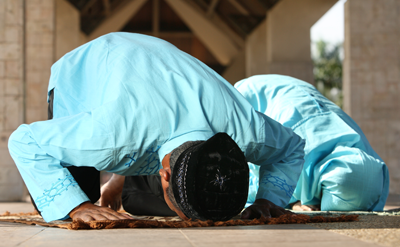


 [dropcap]T[/dropcap]he Prophet (peace be upon him) said, “The group prayer is better than the individual prayer by 27 degrees.”


 [dropcap]R[/dropcap]amadan is not just a month of fasting, but a month of mercy, forgiveness, family, friendship, and hope. Muslims hope that by the end of the month, they are much better people than they were at the beginning of the month, that Allah has forgiven all their sins, and that they have become the people of Paradise.